
AI for content in 2026: which of the 4 Claude models to pick
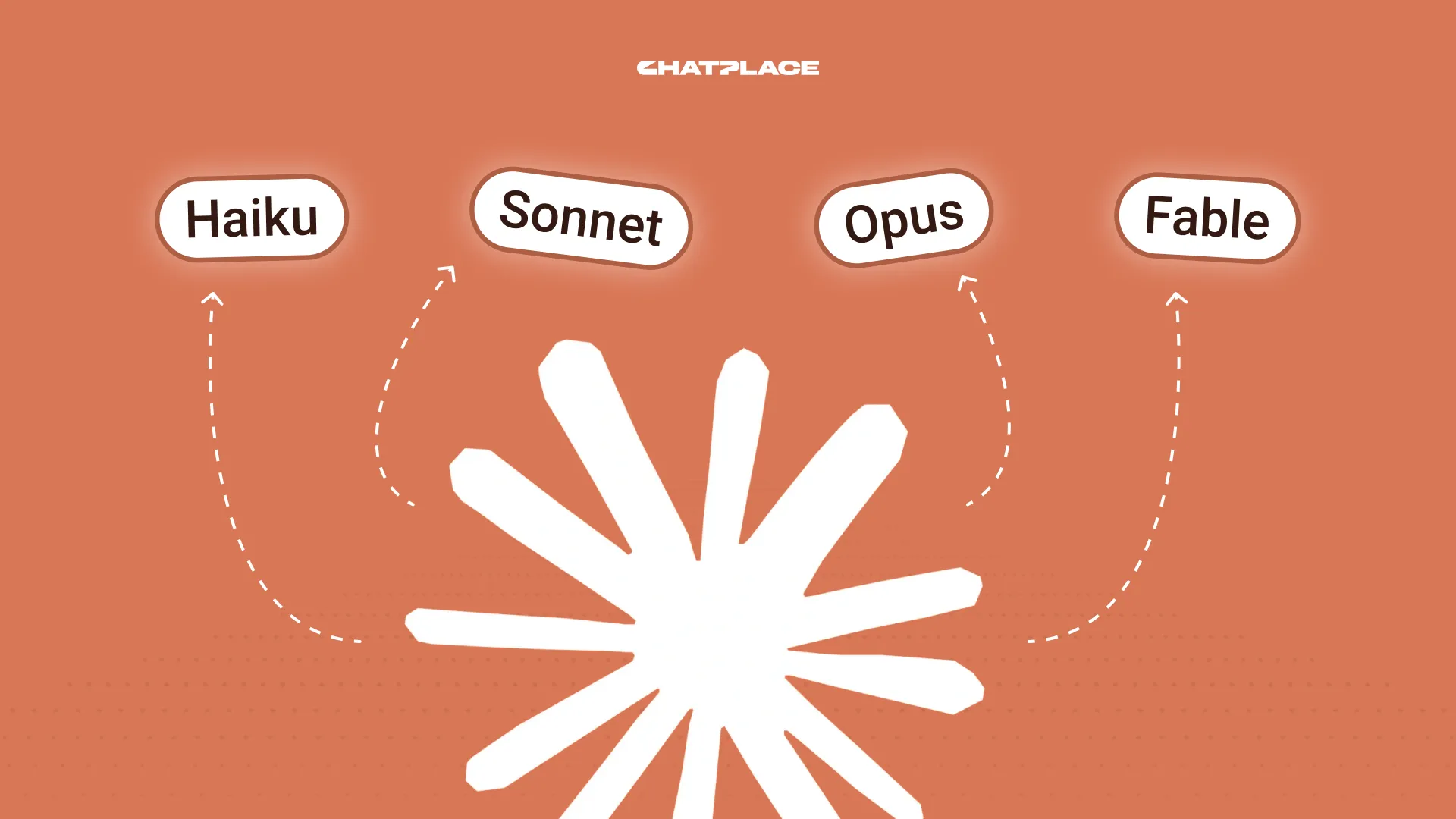
In 2026 the Virale AI Creator opened up a model selector under the chat input – four Claude models from Anthropic plus a Google model for quick tasks. And a new problem showed up right after: most people open the chat, leave the default model on, and never look inside the dropdown. That is the wrong move – the model choice decides both how much of your AI limit you burn on a single carousel post and how deep a full account audit goes.
Four Claude models: why four and not one
One universal AI model for content is always a compromise – either fast and shallow, or deep and slow. In 2026 Virale solved that trade-off differently and built four Claude models of different power right into the selector: a fast one for drafts and everyday routine, a mid one for the actual content work, a heavy one for strategy and audits, and a creative one for unusual formats and author voice.
The logic is simple – every content-marketing job gets its own model: Reels ideas and post captions go on one, a full account audit with a growth plan goes on another, a viral script with a strong hook goes on a third. The $ marks next to the heaviest models are a reminder that depth costs more of your AI limit.
“We keep seeing people fire up Opus for a two-line caption – and then wonder where their limit went. Matching the model to the task cuts spending by roughly half without hurting quality.”
– Dima Torgov, founder of ChatPlace
Haiku 4.5
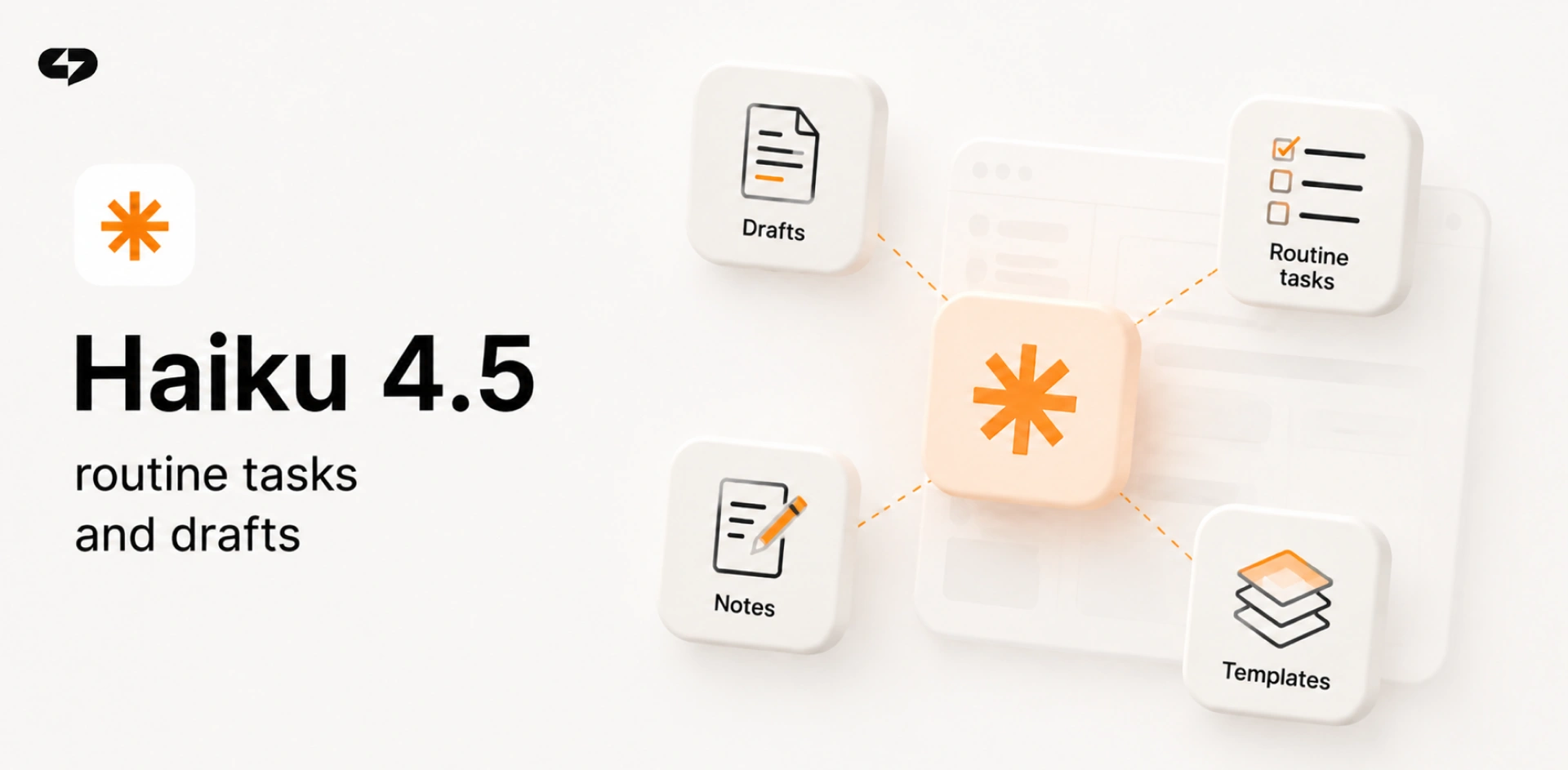
Haiku 4.5 is the lightest Claude model in the selector. It is built for jobs where speed matters more than depth. A quick text polish, a short post caption, a hook checklist, a script draft in one shot, reworking an idea into a different format – Haiku closes all of that in seconds and barely touches your limit.
When to switch to it in Virale:
- you are grinding through 20 idea drafts and want to keep 3;
- you need a quick rework of an old post into a new format;
- you are stress-testing a hook and want 5 wording options;
- you are writing captions for a series of carousel posts.
When not to use it: complex multi-layer audits, deep trend analysis, a 90-day strategy. Haiku will cut corners on those – the answer will be technically correct, but without the depth you actually came to the AI creator for.
Sonnet 5
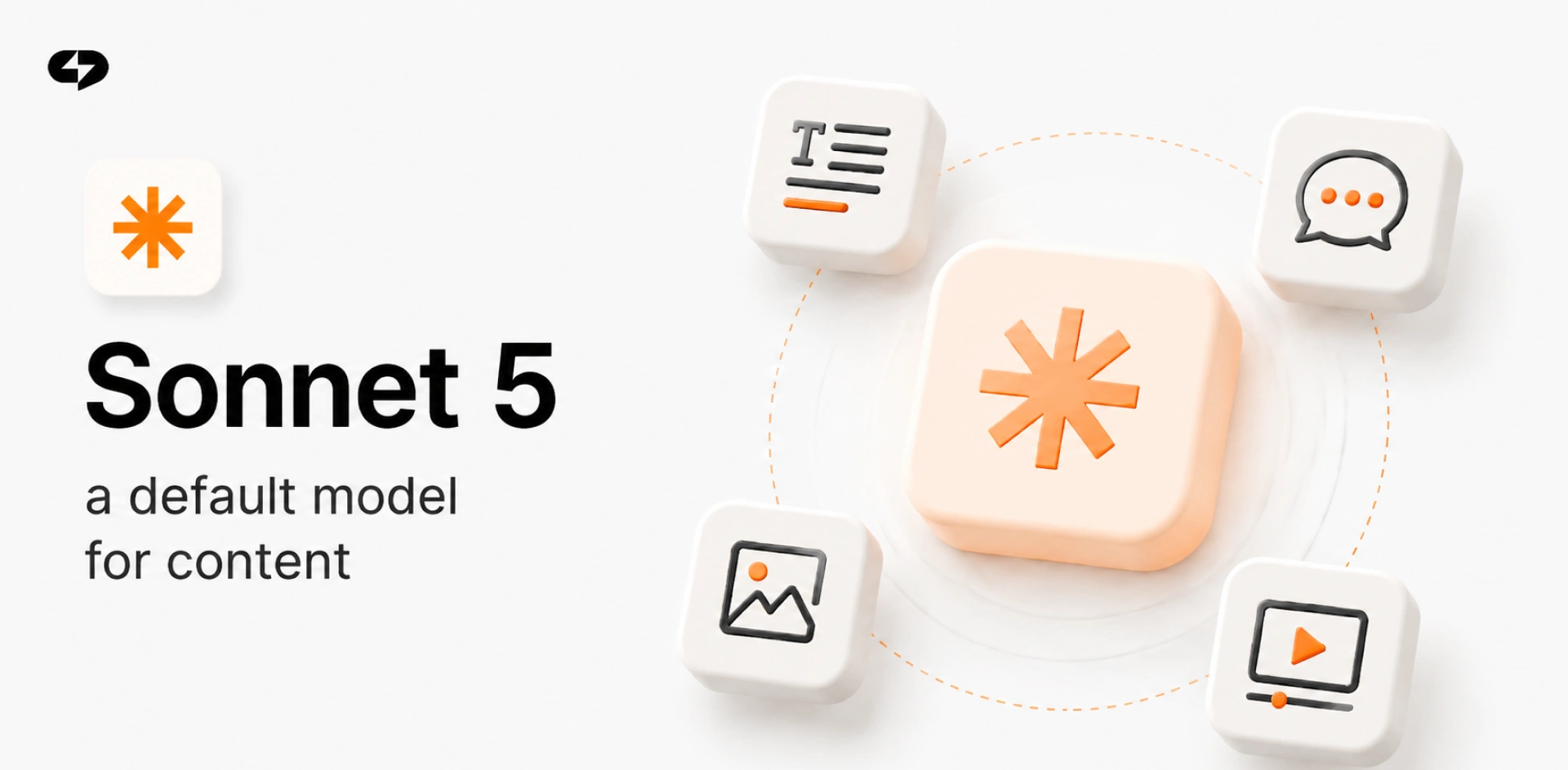
Sonnet 5 is the everyday workhorse for content. It sits as the default in most studios (in the Creator plan and higher), and that is a deliberate call – it keeps the balance between depth and spend. With Sonnet you can write Reels scripts, put together a 30-Day Content Plan, spin up ideas around your niche, and lean on the AI creator for content ideas without obvious quality drops.
Sonnet 5 is a solid starting point when you are not sure which model fits. Start there, look at the result – if depth is missing, step up to Opus. If the answer feels too long for a simple task, drop down to Haiku.
The jobs where Sonnet 5 shines:
- a Reels script with a virality score from the Viral Reels Script preset;
- a 30-day content plan tied to your niche and author voice;
- 30 Hooks – a batch of 30 strong openers for your account;
- a carousel post with a “problem → solution → result” flow;
- reworking an old post around a fresh trend.
A recent breakdown of what actually works on Instagram in 2026 lives in Build a 30-Day Content Strategy in Just 15 Minutes – it plays nicely with Sonnet 5 inside.
Opus 4.8
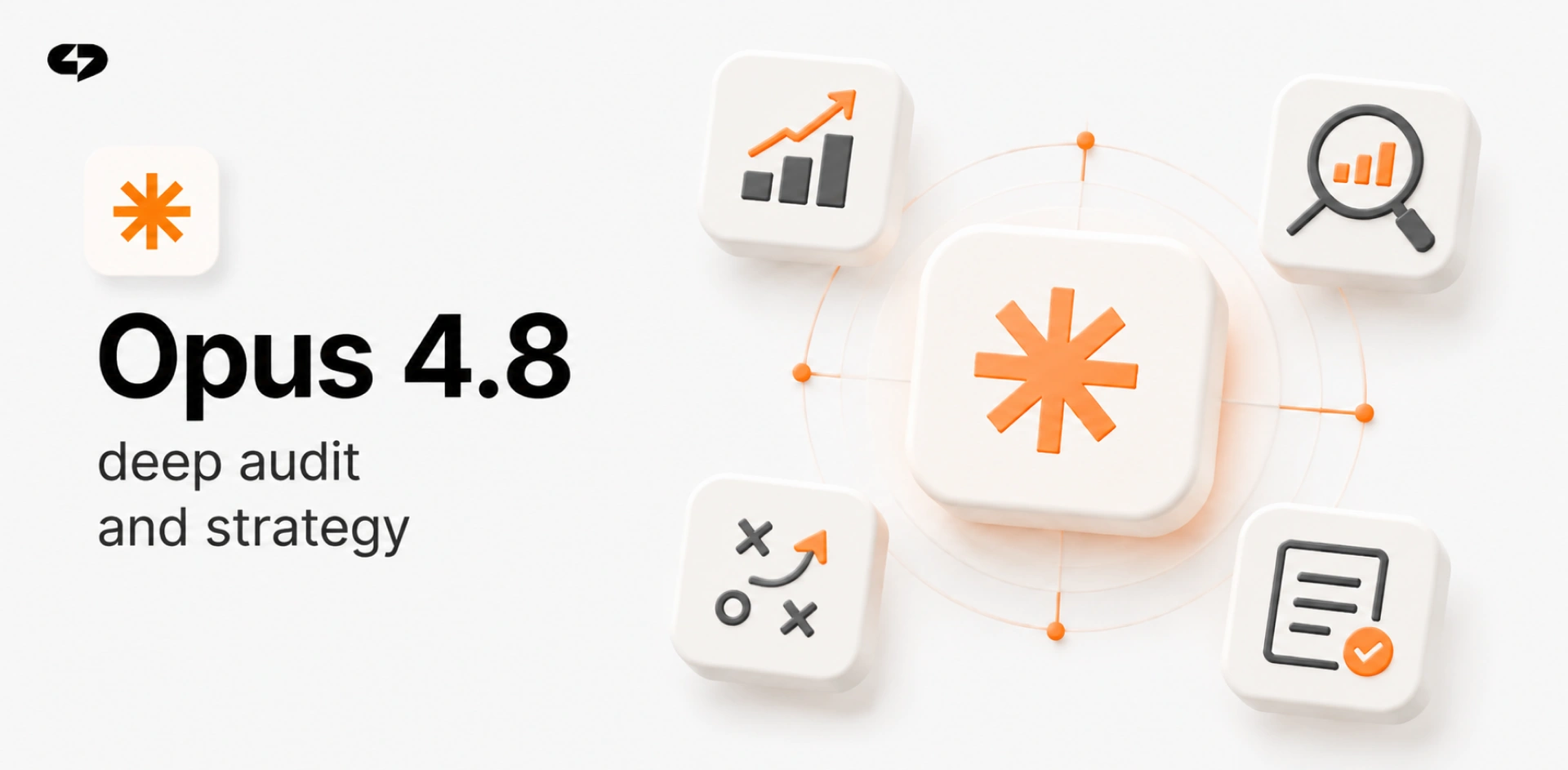
Opus 4.8 is the “brain multiplier” for jobs that demand maximum depth. A full account audit, a quarterly growth strategy, a breakdown of why last month’s Reels underperformed, a detailed competitor analysis – all of that lands on Opus. The $ mark in the selector is a reminder: depth costs a noticeably bigger slice of AI limit % than Sonnet.
Virale jobs where Opus 4.8 shows a real difference:
- Full Audit + Growth Plan – a complete account teardown plus a 90-day plan;
- Reels Teardown – one Reels dissected element by element, with notes on what lifted and what killed the reach;
- Know Your Audience – a portrait of your audience with pains, desires and objections;
- deep analysis of posts and trends across your niche;
- rebuilding a content strategy after a bad month.
Within a single task, Opus 4.8 can provide two to three times as many useful insights as Sonnet. This becomes apparent when you make a neural network for social media analytics your go-to tool – for example, when you analyze an account and receive a list of specific edits.
When not to use it: everyday routine. Asking Opus for a post caption is like hiring a Michelin chef to slice bread. Technically possible – you are just burning the limit for no reason.
Fable 5
Fable 5 is the newest and most creative model in the Claude line-up. The $ mark signals above-average spend, but the output tilts toward originality: strong metaphors, unusual script structures, unexpected storytelling angles, character lines with actual character.
Where to switch it on:
- you need a fresh take on a Reels format that has gone stale;
- you are building a “mini-series” of stories and want lines that feel alive;
- you are working with Brand Character – for example, a regular virtual host with a consistent style and presentation;
- you are writing a brand manifesto, landing copy, or a post where tone matters more than structure;
- you are chasing a hook – the one that pulls people in through surprise, rather than utility.
Fable 5 is about voice and character, not only efficiency. If your account leans on a personal brand and author style, keep this model in easy reach – for the moments when you need creative, not optimisation.
Through the end of August, you can create carousels with Fable at the Opus price on Virale.
Task → model: a quick-pick table
Below is the cheat sheet you can keep open in a side tab while working with the AI creator. Every common content-marketing job maps to a Claude model from the selector, with a short note on why.
| Task | Model | Why |
| Caption draft, short hooks, quick edits | Haiku 4.5 | Minimum spend, speed over depth |
| Daily content-idea generation, posts, carousels | Sonnet 5 | Balance of quality and spend, the base for content |
| Reels script, virality score, rhythm review | Sonnet 5 | Enough depth without burning the limit |
| 30-Day Content Plan, 30 Hooks | Sonnet 5 | Holds author voice across a large batch |
| Full account audit, quarterly strategy | Opus 4.8 | Maximum depth for complex jobs |
| Reels Teardown, dropped-reach analysis | Opus 4.8 | Multi-layer, non-shallow reasoning |
| Audience portrait, competitor breakdown | Opus 4.8 | AI for Reels analysis and post analysis with depth |
| Creative script, unusual format | Fable 5 | Originality and author voice |
| Brand Character lines, live speech | Fable 5 | Character on top of a template |
Rule of thumb: about 70% of content jobs close on Sonnet 5. The remaining 30% split between fast routine on Haiku 4.5, deep analytics on Opus 4.8, and creative sprints on Fable 5.
How to pick a model in the selector and how it affects your AI limit
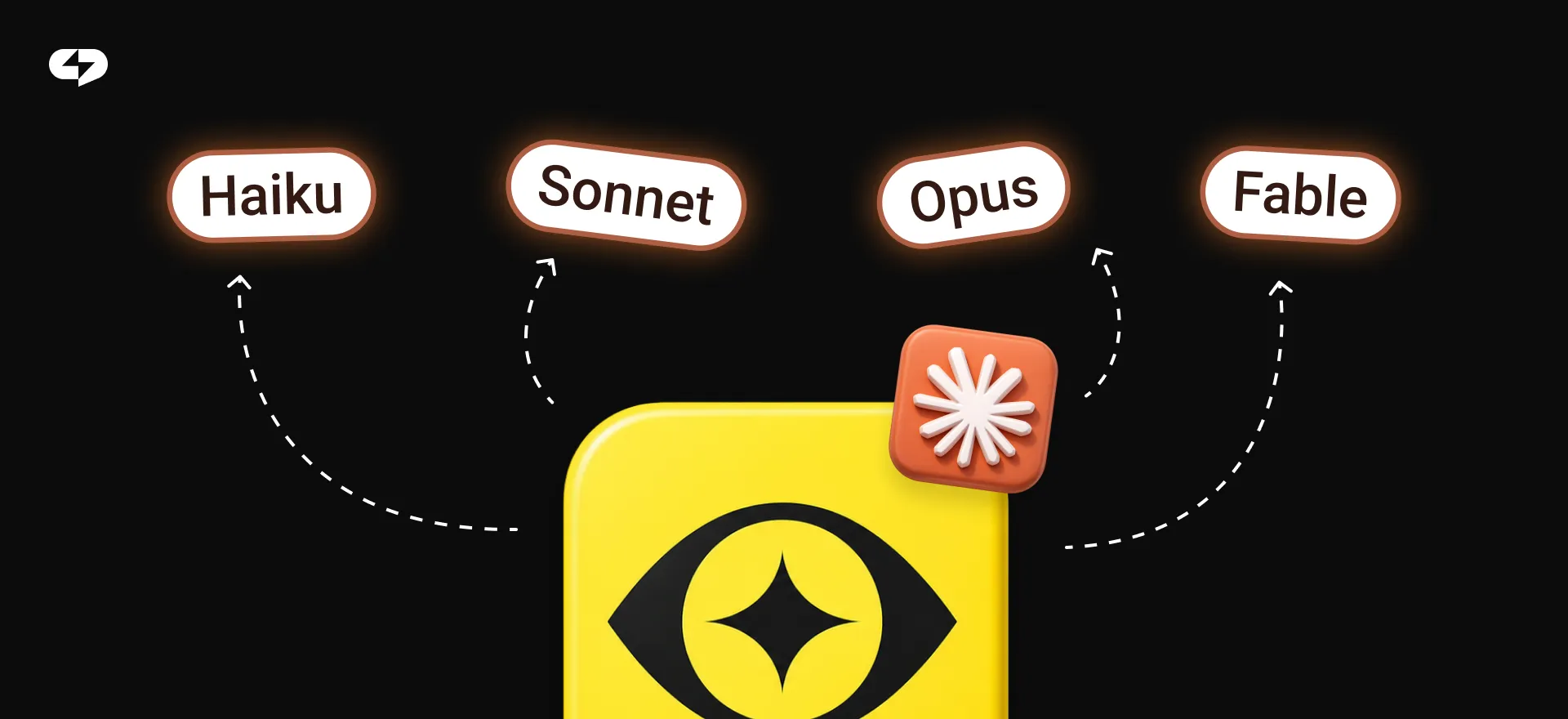
The model selector lives under the Virale chat input. Click it – the dropdown opens: a Claude block with four models (Haiku 4.5, Sonnet 5, Opus 4.8, Fable 5) and a Google block with a Gemini (Flash and Pro) model for specific tasks. The $ marks on Opus 4.8 and Fable 5 (available with the Creator plan and higher) are a direct signal: spend is higher.
Step by step, the flow looks like this:
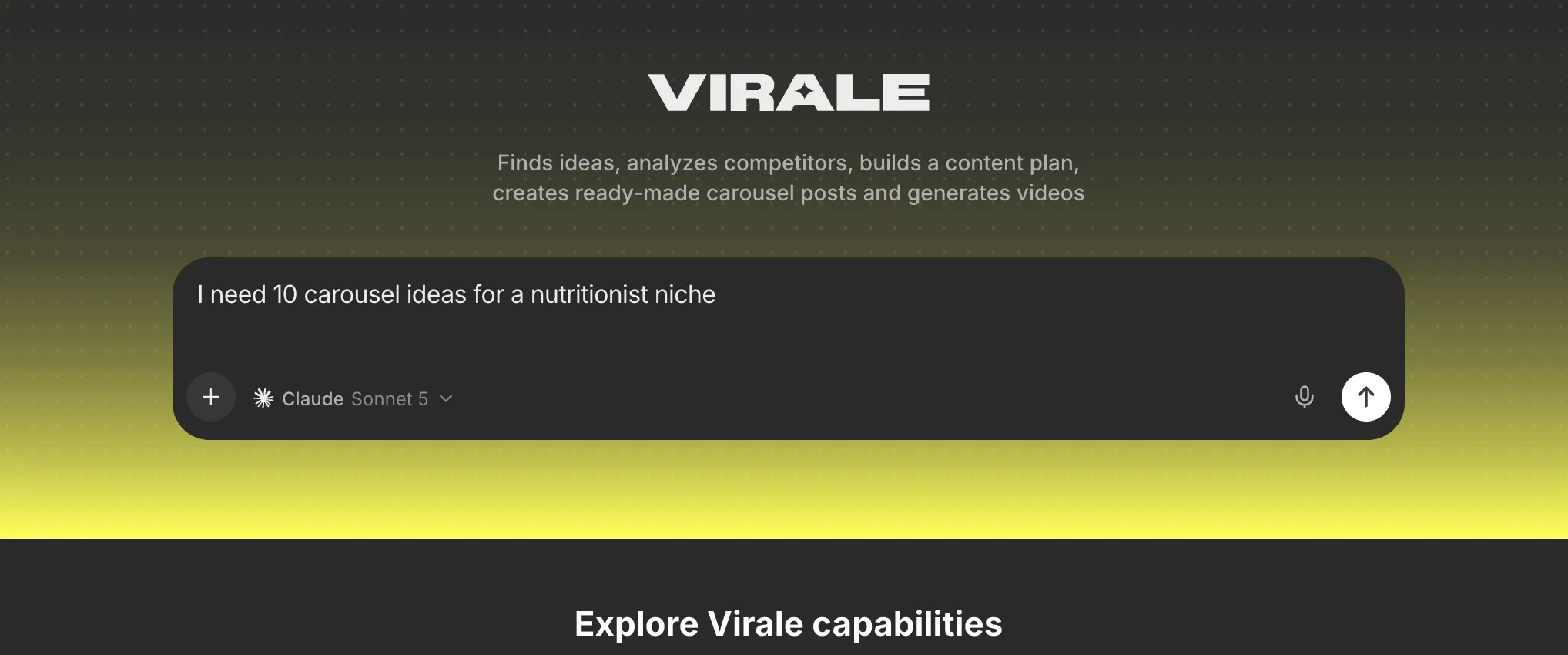
- Phrase the task in one sentence: “I need 10 carousel ideas for a nutritionist niche.”
- Use the table above to pick a model. Niche ideas – Sonnet 5.
- Open the selector under the input, switch to that model.
- Describe the task in the chat: niche context, constraints, output format.
- Read the result, judge it. If the depth is not there – switch to Opus 4.8 and rerun the same prompt.
Resource usage is calculated as an AI limit. In the chat, it’s convenient to view usage as a percentage, and the cost of each generation in credits is visible in advance, before you start – no surprises. The limit is set by the model, not the messages themselves: the same task on Opus 4.8 will consume a significantly higher percentage than on Haiku 4.5. This is the main argument for making an informed choice – you pay for the depth you requested, not for the mere fact of using AI.
We designed the usage system to be a transparent scale rather than a token-based system. The cost of each generation is visible in advance. This way, users can see the connection: a difficult task — a complex model — means a more noticeable drain on their usage limit.
– Dima Torgov, founder of ChatPlace
Virale is part of the ChatPlace ecosystem. ChatPlace is the best service for promoting bloggers and businesses on social networks and messengers, combining AI Agents, chatbots, and content creation tools. That is why the model selector is a way to give you control over quality and spend, not a decorative option.
Read also: A month of content in 15 minutes with AI
How this differs from a single all-purpose AI
A lot of people arrive here after a single all-purpose AI model – used to a chat where every reply comes at one level of depth. Inside Virale the content tools run on Claude from Anthropic; unlike a GPT-family setup, this model handles long context more carefully, is stricter about facts, and follows author style better once the AI creator has learned your account.
The real difference is the idea of the selector itself. A single universal model means the strength of the answer does not change with the task – a post caption and a full account audit both run through the same net. A selector of four Claude models moves you into a different mode: for each preset you consciously decide how much depth and how much limit you are ready to spend. That is closer to how an experienced team works – juniors handle routine, seniors own strategy.
At the same time the AI Creator learns on your account and keeps the author style across all four models. Switching the model changes depth and character – the brand voice stays the same.
Getting started with four Claude models in 2026
Picking the right Claude model for the task is a small, underrated lever: it improves the answer and cuts AI limit spend at the same time. Learn the “task → model” table, run the same task through two models, compare the answers – within a week you already know by instinct when Haiku fits and when to pull out Opus. In 2026 that habit is what separates users who “try AI” from people who actually get results out of it.
FAQ
Which Claude model should I pick for content-idea generation?
For everyday niche content-idea generation, Sonnet 5 is the safe pick in Virale – it is the default in the selector in the Creator plan and higher. It holds author voice, follows your niche, and does not waste the limit. If you need to run through 20 rough ideas fast, step down to Haiku 4.5. If you are hunting for a fresh creative angle, step up to Fable 5.
What is the difference between Haiku and Opus?
Haiku 4.5 is the fastest and lightest model – built for routine: short captions, drafts, rework of ideas. Opus 4.8 is the deepest model with a $ mark (available with the Creator plan and higher) – built for account audits, strategy, and complex analysis. On the AI limit % meter Opus is noticeably more expensive, so running it on routine tasks makes no sense. Simple rule: routine – Haiku, base – Sonnet, strategy – Opus.
Which model is best for Reels analysis and trends?
For a full breakdown of a single Reels in the Reels Teardown studio or for Virale niche trend analysis, Opus 4.8 is the right pick. As an AI for Reels analysis it works in layers – rhythm, hook, edit, message – and returns concrete edits. For a quick first-pass review of a post, Sonnet 5 is enough; it works fine as an AI for post analysis and light trend review without the heavy strategy work.
How does model choice change AI limit % spend?
Directly: the same task on Opus 4.8 or Fable 5 (both $-marked and available with the Creator plan and higher) eats a noticeably bigger share than on Haiku 4.5 or Sonnet 5. Spend is priced by model weight and task complexity, not by message count. A conscious pick in the selector is the main lever for stretching a Virale Creator plan across a full month: keep 70% of tasks on Sonnet 5, and pull in Opus and Fable only when you actually need them.
How is Claude different from GPT for social-media content?
Claude is Anthropic’s model family. It powers the AI creator and every content tool inside: Viral Reels Script, 30 Hooks, 30-Day Content Plan, Full Audit + Growth Plan. The practical difference is that Claude handles long context more carefully, tracks author style tighter across content-marketing tasks, and behaves predictably inside the model selector. General-purpose AIs deliver one level of depth for every task; here that level is yours to choose.
Can I switch models mid-task?
Yes. The model selector is open in Virale at any point – between messages you switch models and keep the same conversation going. A common flow: start on Haiku 4.5 for hook drafts, step up to Sonnet 5 to assemble the script, then hand the final polish of the key beats to Opus 4.8. One big task moves down a pipeline and spends the limit more efficiently than pushing everything through a single heavy model.

Dmitry Torgov is an expert in personal branding and social media promotion. Co-founder of ChatPlace.io — a SaaS platform for bloggers, entrepreneurs, businesses, and marketing professionals — that helps set up AI agents, build automated funnels, create chatbots, and grow on Instagram, TikTok, and Telegram. Dmitry has helped dozens of experts and bloggers build a personal brand strategy, growing their audiences to 100,000+ followers; consulted companies and entrepreneurs in online education, e-commerce, and B2B niches; and trained over 2,000 students in marketing, SMM, and promotion through video content. “Personal branding is not about views, likes, or quick hype. Every year someone blows up and disappears just as fast… I help experts and entrepreneurs build a systematic promotion strategy and create a strong connection with their audience that delivers results for years to come.”